

Best Drainage Ideas to Drain Water Away from House
Trust the experts … Trotter offers lifetime warranties since 1929!
Basement Waterproofing • Crawl Space Waterproofing • Structural Repair • Drainage
TL;DR: These ideas to drain water away from house foundations help you control runoff, correct yard drainage, prevent basement leaks, and choose when to call an expert.
- Clean your gutters and extend downspouts at least six feet from your foundation.
- Grade the soil so it drops about two inches within the first ten feet away from your house.
- Install a properly sloped French drain when grading cannot handle the amount of water collecting in your yard.
- Use catch basins, dry wells, waterproofing, or interior drains for persistent water problems.
- Call Trotter when basic fixes do not stop recurring leaks or standing water.
Ah, the sound of gentle rain hitting the roof, so relaxing. At least, it is for many people.
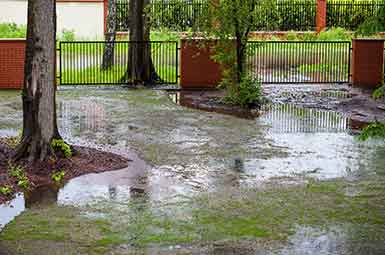
For you? You’re immediately picturing how the yard turns to mud and you feel anything but relaxed.
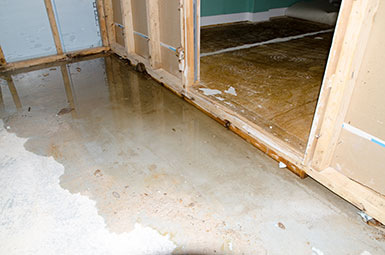
Then, within an hour, you’re standing at the top of your basement stairs, watching droplets and water creep slowly across the floor.
It’s a drainage problem. The good news is that there are actionable ideas to drain water away from a house foundation that doesn’t mean you need to rip your entire yard apart.
Why Does Water Keep Finding its Way Back?
Most homes in the North Georgia region sit on dense, compact clay that doesn’t absorb water the way sandier soil does. When a storm rolls through, that clay stays saturated for days. Water has nowhere to go, so it pools against your foundation walls and looks for any gap it can find.
Add in a summer of heavy afternoon thunderstorms followed by a dry stretch that cracks the ground open, and you’ve got a foundation under constant pressure. That swelling and shrinking movement widens existing cracks and opens new pathways for water every season. Understanding that cycle explains why a single fix rarely solves the whole problem. You usually need a few strategies working together, and layering them is what keeps a basement dry or crawl space dry year after year.
Where to Start? Start With Your Gutters and Downspouts
Before you dig a single trench, look up. Clogged gutters or downspouts that dump water two feet from your foundation undo almost everything else you might do in the yard. Clean your gutters twice a year and extend downspouts at least six feet from the house.
This single step is one of the simplest ways to drain water away from house walls, and it costs almost nothing compared to excavation work. Homeowners skip it constantly because it feels too basic to matter, but it’s often the first thing our inspectors check. A roof shedding thousands of gallons during one storm has to go somewhere, and you want that somewhere far from your footer.
Grade Your Yard So It Slopes Away from the House
Once your roof water is under control, turn your attention to the ground itself. Soil settles over time, and a yard that sloped correctly when your home was built can flatten out or even tilt toward the foundation years later.
A proper grade drops about six inches over the first ten feet from your house. That slope answers a lot of questions homeowners ask about how to drain water away from house perimeters without hiring anyone. Bring in a few yards of fill dirt, tamp it down, and reseed the area once you’ve reestablished that pitch.
Low spots near patios and driveways deserve extra attention here. Water finds the lowest point in your yard every time, and if that low point sits next to your foundation, you’ll keep fighting the same battle every season no matter what other fixes you make.
French Drains: The Workhorse of Yard Drainage
When grading alone can’t keep up with the volume of water your property collects, a French drain earns its reputation. This system uses a perforated pipe buried in a gravel-filled trench to intercept water before it reaches your foundation and carry it somewhere safer.
Trench depth and slope matter more than most DIY guides let on. A trench that’s too shallow floods during heavy rain, and pipe laid flat instead of sloped just holds standing water underground, which defeats the purpose of installing one. Getting that pitch right is exactly why draining water away from the house through a French drain often turns into a job for Trotter.
What Are Some Foundation Drainage Ideas Worth Considering?
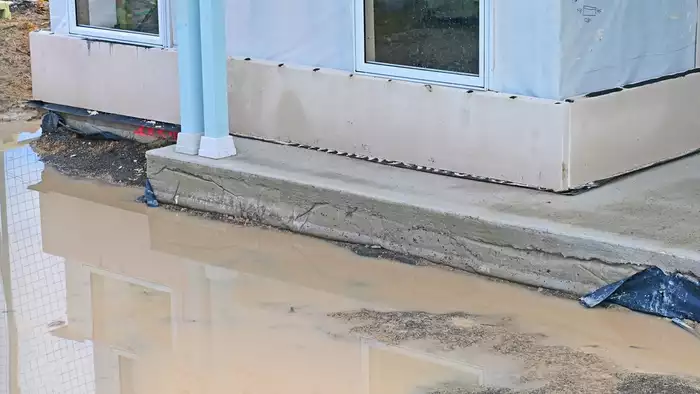
Beyond the yard itself, a few foundation-specific approaches give you added protection during Georgia’s heaviest downpours. Interior drain systems collect water that’s already made it past your foundation walls and route it to a sump pump or gravity drain before it ever touches your floor.
Exterior waterproofing membranes work further upstream, sealing the foundation wall itself so water can’t soak through in the first place. These foundation ideas to drain water away from house walls work best when they’re matched to your specific soil, slope, and the age of your home’s original drainage system.
Dry wells and catch basins round out the toolkit for yards with persistent low spots. A catch basin collects surface water at a specific point and channels it underground to a discharge area far from your house, which takes pressure off every other system you’ve installed and keeps your yard usable after a storm.
Know When It’s Time to Call a Local Expert
Cleaning gutters, extending downspouts, and touching up your yard’s grade do help, and plenty of homeowners handle them without a second thought. Others, especially French drains and interior drainage systems, involve decisions that get expensive to fix if they’re wrong the first time.
If you’ve tried the surface-level fixes and you’re still seeing water after every storm, that usually signals a deeper issue. Maybe it’s a crack in your foundation, a high-water table, or drainage that was never sized correctly for your lot. Trotter, who has walked thousands of properties on this same clay can spot patterns you won’t catch on your own, and they’ll know how to reroute water away from house foundations without disturbing the parts of your yard that already work fine.
We’ve watched this exact scenario play out for generations of homeowners across the metro area, and we take it personally. Your foundation is the one part of your home you can’t see and can’t afford to ignore.
You’ve spent weekends hauling fill dirt, re-pitching the yard, and standing in the rain anxiously watching the same water find the same low spot—and you’re exhausted. We’re ready to help.
Our BHA-certified inspectors will walk your property, pinpoint exactly where water’s getting in, and map out a drainage solution backed by nearly a century of experience protecting Georgia homes.
We protect the house and your sanity, because it’s protecting you and everything inside it. Reach out for an estimate before the next big storm.