

Everything Starts with Drainage: How Poor Yard Drainage Can Damage Your Foundation
Trust the experts … Trotter offers lifetime warranties since 1929!
Basement Waterproofing • Crawl Space Waterproofing • Structural Repair • Drainage
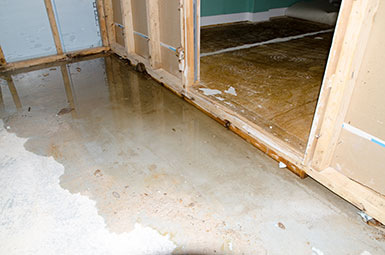
Poor yard drainage is one of the most common, and most overlooked, causes of wet basements, musty crawl spaces and foundation damage. When water isn’t properly directed away from your home, it can saturate soil, increase pressure on foundation walls, and lead to cracks, basement moisture, and long-term structural issues. In addition, poor drainage will also lead to cracked or sinking sidewalks, patios, and driveways, landscape washout, and mold and mildew growth
In this blog, you’ll learn:
- How poor yard drainage directly contributes to expensive home repairs
- Why Yard Drainage is So Important to Home’s Protection
- Common warning signs of drainage issues in your yard
- The most effective drainage solutions for protecting your home
- When professional drainage is needed to prevent costly repairs
If you’ve noticed cracks in your basement walls, moisture inside your home or any of the previous mentioned items, you might think that it’s coming from your basement. Often these issues begin at higher altitudes, right in your yard.
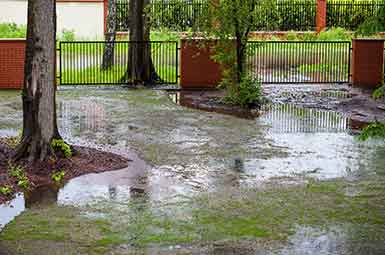
If your property experiences poor yard drainage then rainwater is most likely collecting around your home’s foundation instead of flowing away from it. When this happens repeatedly over a long amount of time, all that excess moisture tends to weaken the soil around your
home, increase pressure on your foundation walls, and ultimately lead to serious structural damage.
That’s why it’s crucial to understand how drainage affects your home’s foundation so you can protect your house.
Can Poor Drainage Cause Foundation Problems?
Yes. Poor drainage in yards is actually one of the most common causes of serious home issues.
With a properly designed yard drainage system from an experienced professional– water flows away from the home – protecting what matters most…. your home.
In many cases of poor drainage, stormwater collects near the foundation and saturates the surrounding soil. As the soil becomes heavier and more unstable, it pushes against foundation walls. This increases the risk of cracking, bowing, and shifting, making it much easier
for water to make its way in and cause structural damage and ultimately a wall collapse.
The Numbers Don’t Lie: Here’s Why Yard Drainage is So Important to Home’s Protection
Every rainstorm produces way more runoff than most people realize. According to the U.S. Department of Energy’s Building America Solution Center, just a few inches of rain on a typical suburban lot can generate nearly 10,000 gallons of water runoff. That’s about 333 average bathtubs worth of water in one storm alone!
When all that water is NOT properly directed away from your home, it will find its way into your basement or crawlspace and more often han not, compromises the long-term structural integrity of your home.
Leaks are just the beginning. In these types of scenarios, you also have to worry about mold growth, poor air quality, and structural deterioration leading to instability.
In short, the right yard drainage system is absolutely critical. Rather than being an optional add-on, it’s a must-have.
How Do I Know If My Home Has Drainage Issues?
Common signs of poor drainage in a yard include:
- Persistent puddles
- Erosion near your foundation
- Downspout Problems
- Improper grading
- Foundation Cracks
- Soil that slopes toward your house
Home inspection professionals frequently identify grading and drainage issues as hidden contributors to foundation damage. The international Association of Certified Home Inspectors (InterNACHI®) explains that improper grading, landscaping changes, and downspouts that discharge water too close to the home are common causes of foundation flooding and structural movement.
If water is lingering outside your home, chances are it’s already affecting what’s happening inside.
How to Fix a Yard with Poor Drainage
Fixing a yard with poor drainage starts with regarding the soil to slope away from your home and installing the right drainage solution—like downspout extensions, French drains, catch basins drains—to move water where it belongs…. AWAY from your house!
Drainage solutions are complicated and must be accessed by an experienced professional and most importantly have a warranty. In some cases, the solution can be a simple DIY project. But because every home and its topography are unique and different, thesolution
is often a complex puzzle of drainage products that must be installed correctly to work together.
These solutions may include:
- Downspout drains to redirect roof runoff
- Catch basins to collect surface water
- Channel drains for patios and walkways
- Swales or gravity drains that guide water away from the structure
- Complex soil stabilization
- Gravity drains
- French drains
- Dry Creek Beds
Water should never be dumped into the backfill area around the foundation. Instead, it should be directed at least ten feet away or more to reduce soil saturation and pressure on foundation walls.
There’s no one-size-fits-all prepackaged yard drainage solution. Soil conditions, slopes, and runoff patterns vary widely from property to property. As a result, lasting solutions typically require professional design and installation by experts.
Experience Matters When it Comes to Drainage
Drainage problems are not always obvious and fixing them correctly requires an understanding of soil behavior, water flow, and structural impact, not to mention a keen eye for investigating what’s actually happening. That’s why experience matters more than you may know.
Trotter Company, family owned and operated for nearly 100 years, has generations of experience helping over 100,000 homeowners protect their homes from water-related damage. Our experience, expertise and trustworthiness with drainage, waterproofing, musty crawlspaces and structural repair reflects a deep understanding of how water affects homes over time.
Protect Your Foundation from the Ground Up
Here’s the bottom line. Home damage often starts from the top, or ground-level, as a result of water pooling in the yard after storms. This is often a result of poor drainage.
Thankfully, addressing this early can help prevent costly repairs, protect your home, and preserve long-term value.
If you’re seeing standing water, basement or crawlspace moisture, or signs of foundation stress, request an evaluation of your home’s foundation and yard drainage solutions. Get a free estimate now.